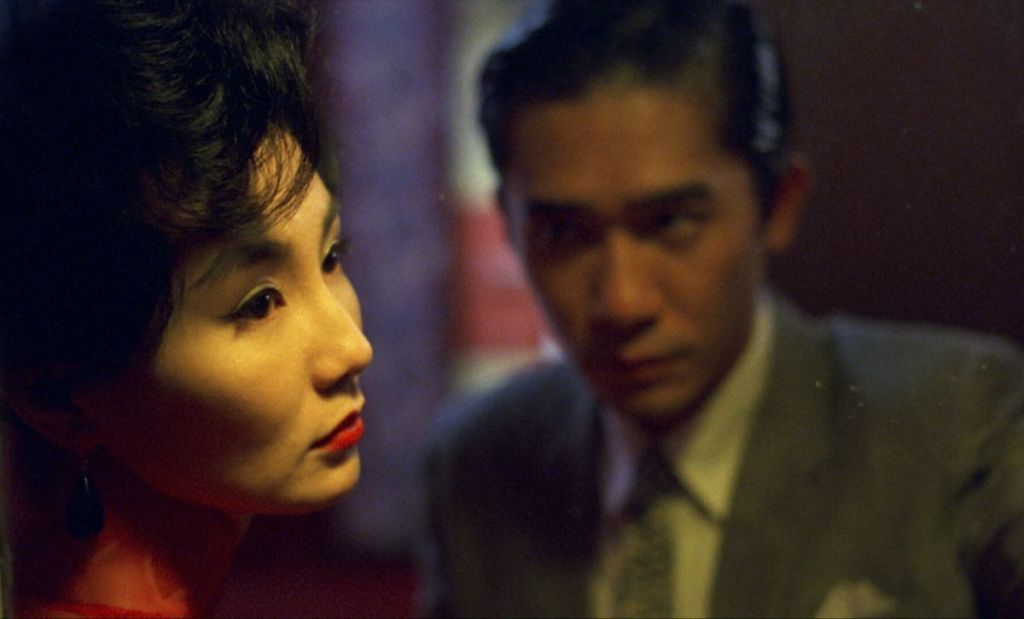
‘He remembers those vanished years. As though looking through a dusty window pane, the past is something he could see but not touch.’
—In the Mood for Love
Wong Kar-wai’s movie, In the Mood for Love, tells the story of Chow Mo-wan and Su Li-zhen, who, after discovering that their spouses are having an affair, attempt to reenact their partners’ relationship to understand the betrayal. However, as the act gradually becomes real, their emotions flow between repression and ambiguity, eventually dissolving in silence.
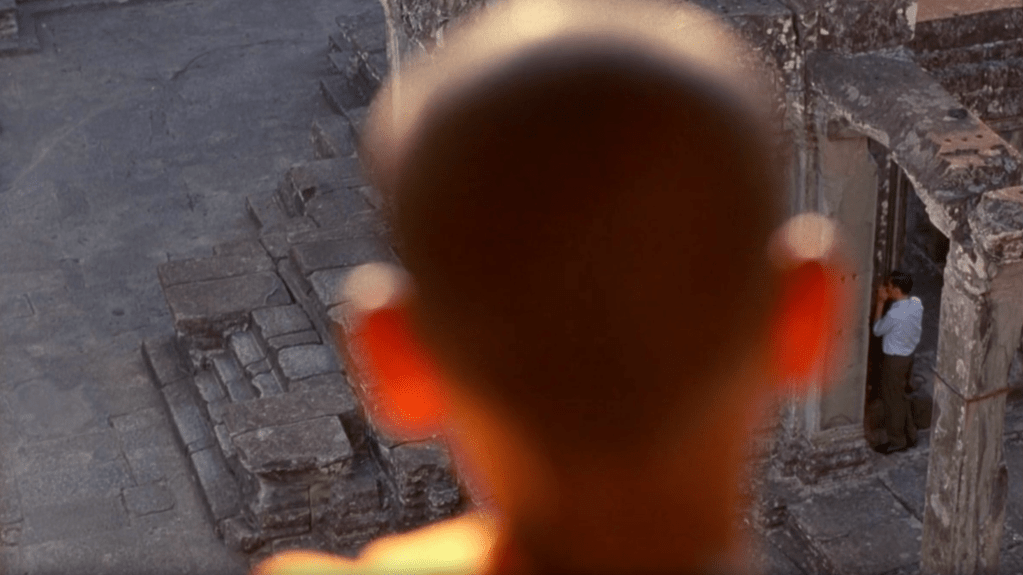
The film’s mise en scène presents the complexity and subtlety of their relationship in a hazy and restrained manner. It concludes with the scene of Chow whispering into a stone hollow at Angkor Wat, merging narrative and imagery, and burying his unspoken sorrow within the passage of vanished time.
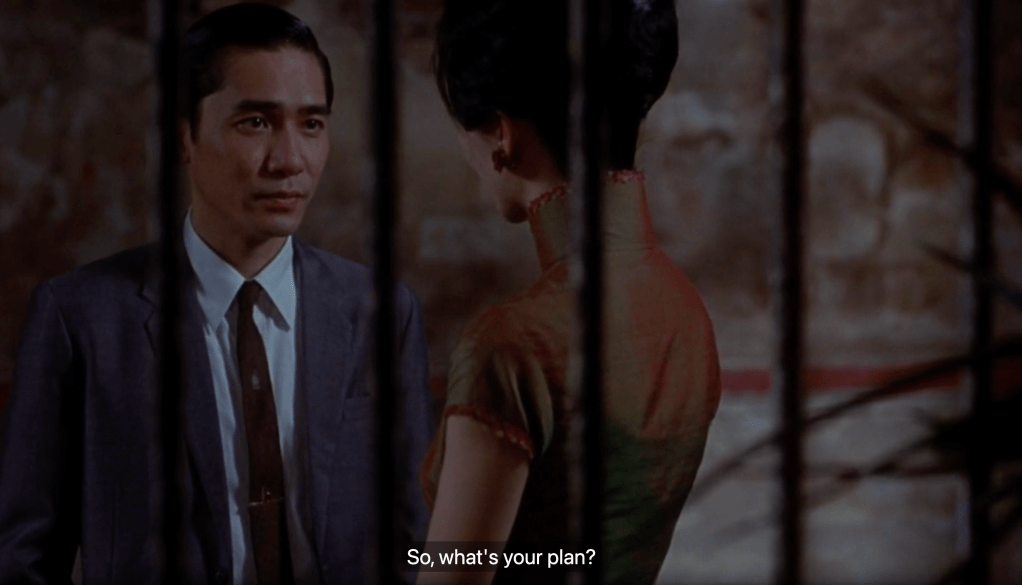
In the film, Wong Kar-wai repeatedly employs the ‘frames within frames’ technique, allowing the audience to experience the hazy and restrained emotions between Chow and Su from the perspective of a voyeur. The sense of ‘being watched’ echoes the narrative setting in which the two characters reenact the affairs of their unfaithful spouses, casting a delicate veil of ambiguity that cannot be pierced over their relationship. They seem to be free, yet are bound by moral constraints, struggling between desire and rationality.
In the scene where Su and Chow meet and converse (40:00-42:34), the voyeuristic perspective further intensifies the ambiguity of their relationship. It remains uncertain whether they have already fallen in love, or whether they, like the partners they resent, have betrayed the fidelity of love itself. Through the use of frames within frames, the presence of bars visually transforms their emotions into a state of confinement. Trapped within the moral framework of society, they suppress their desires, yet gradually sink deeper into them.
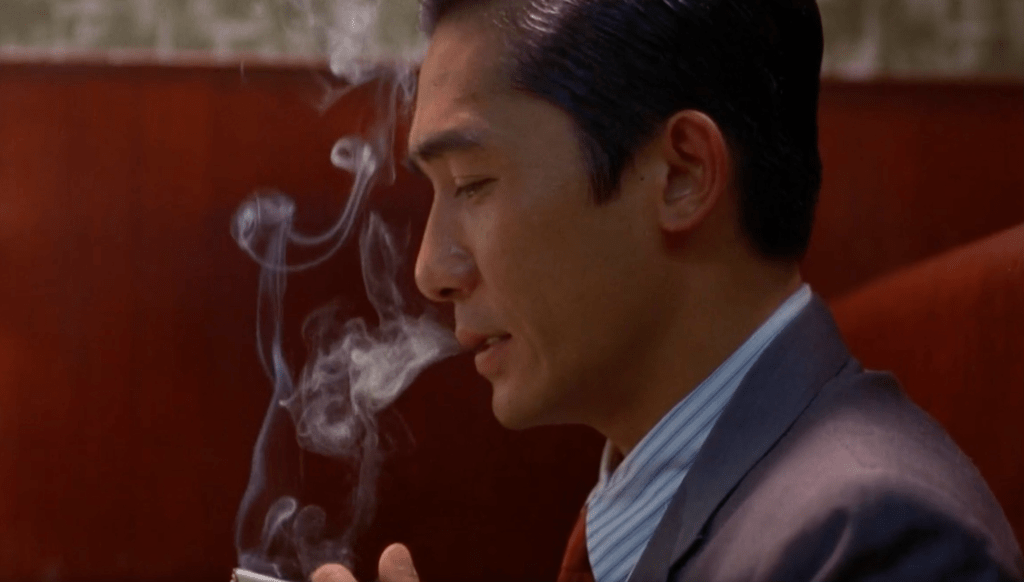
The repression of feeling within Chow and Su is symbolised through the imagery of smoke. The hazy, drifting smoke mirrors their restrained emotions—intangible and impossible to grasp. Therefore, in the film, cigarettes not only represent self-control but also embody suppression and escape.
In their first dinner together (28:00-31:00)—the beginning of their play—the cigarette in Chow’s hand symbolises his fear and repression upon realising his spouse’s infidelity. As the smoke slowly disperses, it becomes both a metaphor for the growing intimacy between the two and a foreshadowing of how their relationship will eventually fade with time. Yet, even after the smoke has cleared, a faint scent and delicate wisps remain in the air, just like their love, hidden, fleeting, yet leaving an indelible trace in Chow’s heart.
The passage of time gradually buries the emotions between Su and Chow. Wong Kai-wai uses the imagery of the clock to present the passage of time in the most direct way to the audience (7:04, 20:41, 37:10, 1:16:00), creating a sharp contrast with the delicate and floating emotions between the two. At the same time, through slow-motion scenes, he renders their romantic entanglement ambiguous and interwoven between reality and illusion.
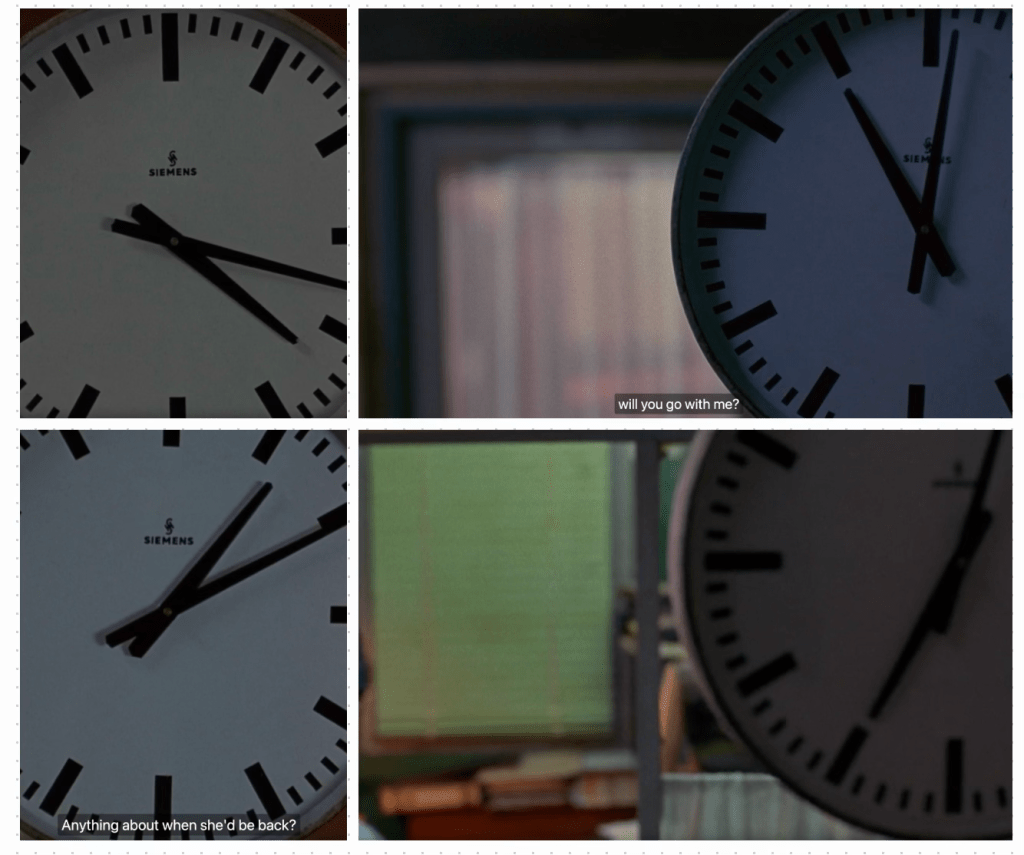
In the mahjong scene at the beginning of the film (5:20-7:00), the interaction between Su and Chow, as well as their spouses, becomes subtle and dreamlike due to the combination of slow-motion long shots and the melody. The slow motion slows down and prolongs their relationship, yet within this illusory prolongation, their connection gradually fades away until it is finally swallowed by time.
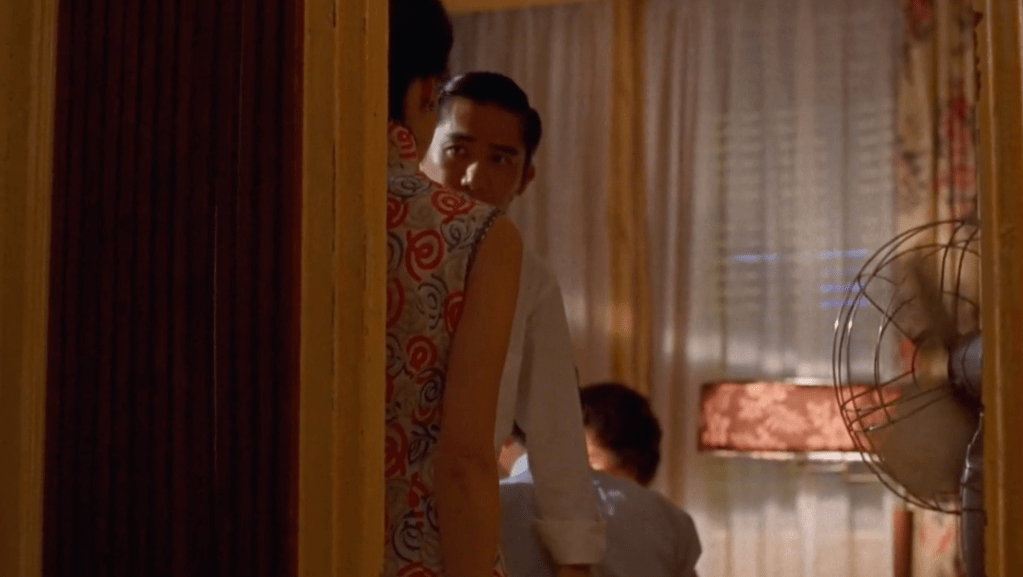
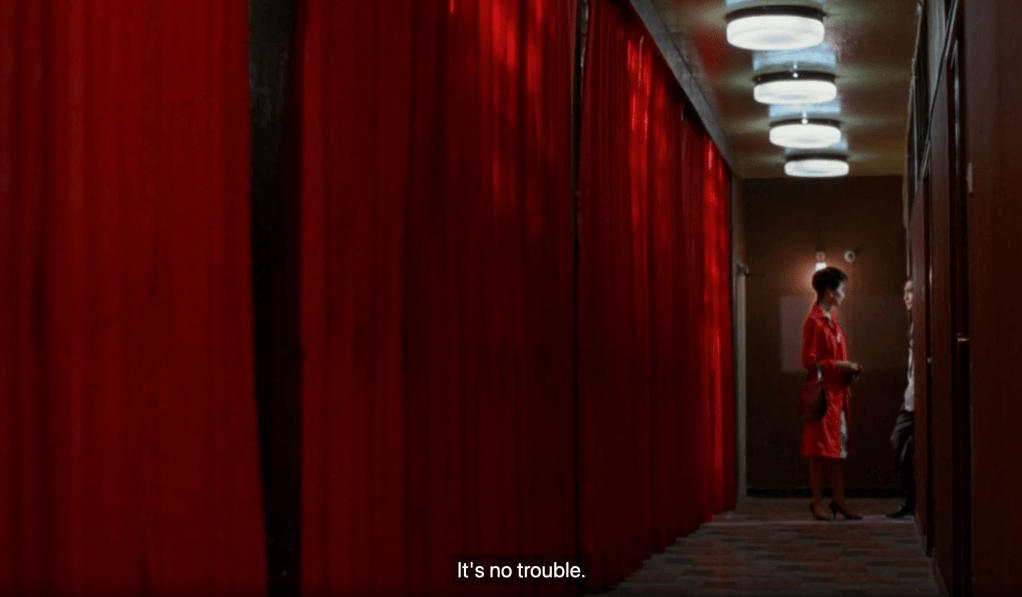
Although Wong Kar-wai has already revealed the subtle distance between Chow and Su through the cinematography and visual imagery, the use of colour in In the Mood for Love especially symbolises the tension between their desire and restraint. While red in the film represents passion and impulse, green signifies rational suppression and emotional control.
In the scene where Su goes to the hotel to find Chow after answering his call (54:02-56:00), she can no longer suppress her feelings for him, rushing to the hotel in a striking red coat. The hotel curtains are a deep, vivid red, while the floor is interspersed with faded shades of green. Against this background, the red of Su’s coat stands out even more prominently, symbolising the inner confrontation between her desire and restraint.
In the later scene where Su and Chow spend time together in the hotel (57:06), although she is dressed in a green chenogsam, everything around her is bathed in red. The green on her body suggests that a trace of restraint still lingers within her, yet desire has already drawn her deeply into the intoxicating joy of this forbidden love, from which she can no longer escape.
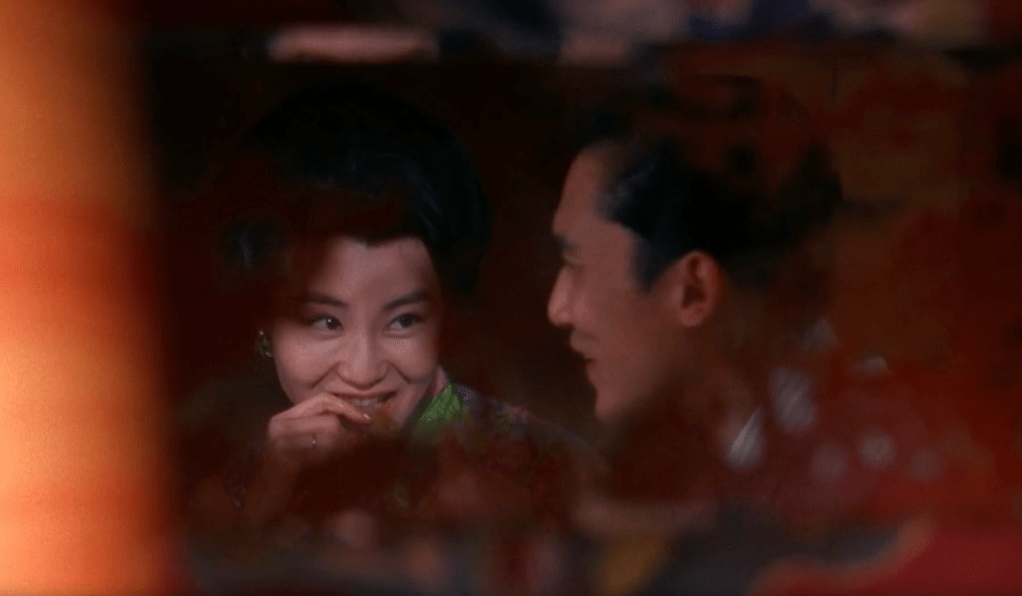
The love between Su and Chow has long simmered with the passage of time, and their blossoming years become a tragedy shaped by time and repression.
At the end of the movie (1:29:00-1:33:00), as the archival footage of Charles de Gaulle’s visit to Cambodia plays, the story of Chow and Su appears increasingly minor. Under repression, Chow’s feelings for Su grow deeper and more vigorous, yet all he can do is whisper his unspeakable love into the stone hollow of Angkor Wat. When the camera shifts to a higher angle, a young monk silently watches Chow from above. The love between Chow and Su seems to have always been stared, and has been eternally sealed within time and memory.
Through the meticulously crafted mise en scène, the use of frames within frames, drifting smoke, and the contrast and symbolism of colour, Wong Kar-wai gradually reveals Chow’s descent from rational restraint into emotional entrapment, unfolding like the slow diffusion of smoke.
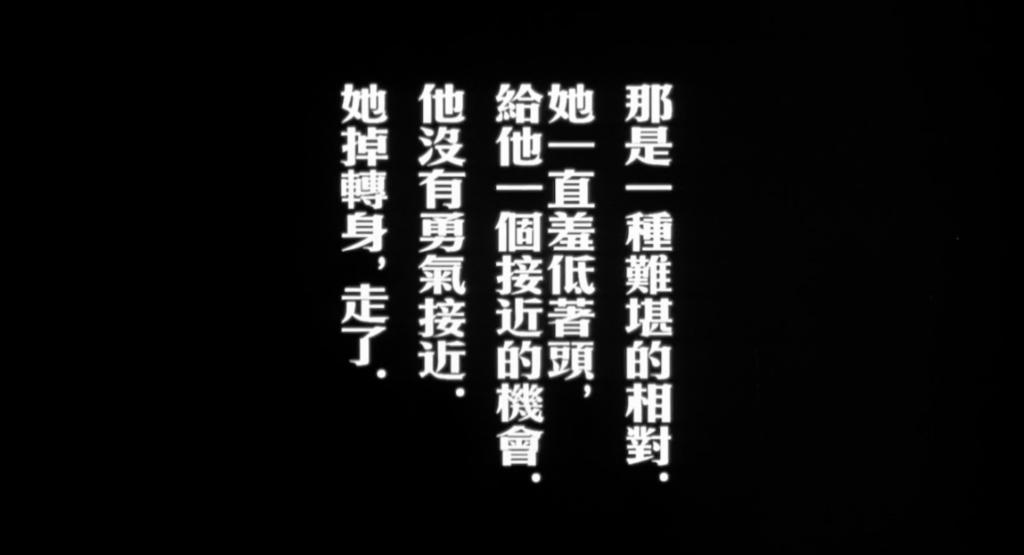
He can neither possess Su nor escape the emotional prison they have built together. As the film’s opening lines say: ‘It is a restless moment. She has kept her head lowered to give him a chance to get closer. But he could not, for lack of courage. She turns and walks away.’
 Eileen's World
Leave a comment